

Reciprocating air compressors, often referred to as piston compressors, remain one of the most widely used types of compressed air systems across workshops, small businesses, and industrial environments. Known for their durability, simplicity, and cost-effectiveness, they are a reliable solution for a wide range of applications.
In this blog, we take a detailed look at how reciprocating air compressors work, their key benefits, different types, and how to choose the right system for your business.
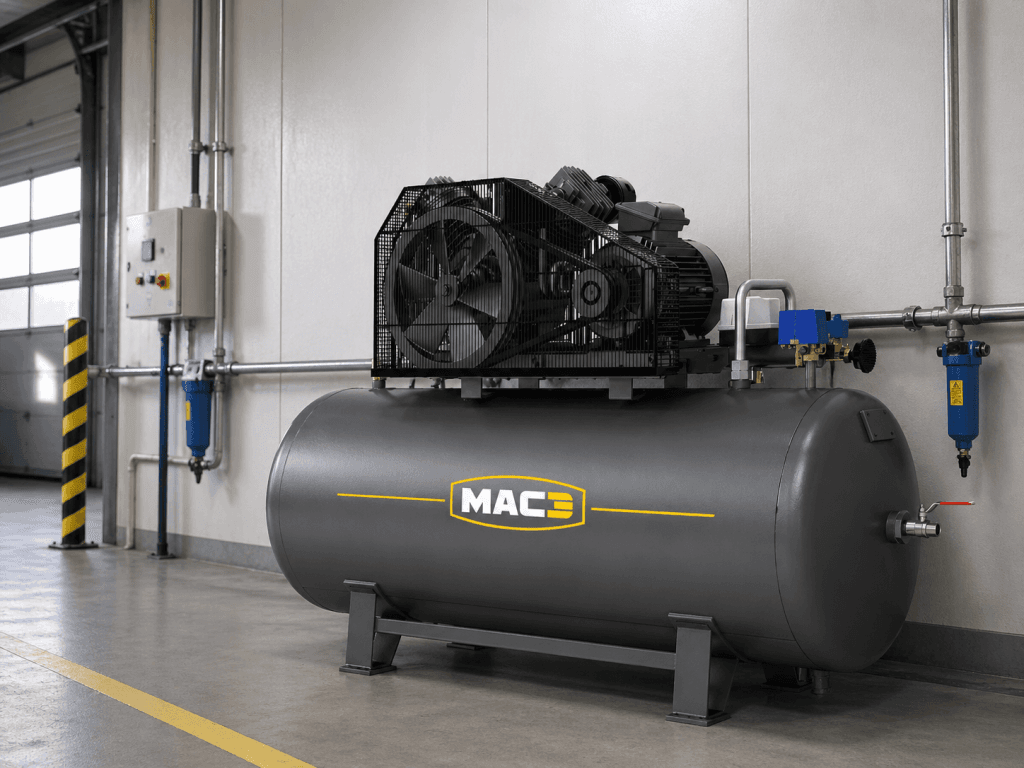
What Is a Reciprocating Air Compressor?
A reciprocating air compressor uses a piston-driven mechanism to compress air within a cylinder. As the piston moves down, it draws air into the chamber through an intake valve. When the piston moves back up, the air is compressed and pushed out through a discharge valve into a storage tank or system.
This process repeats continuously, delivering compressed air as required. Unlike rotary screw compressors, which provide a constant flow, reciprocating compressors are typically used in applications where air demand is intermittent rather than continuous.
How Reciprocating Compressors Work
The operation of a reciprocating compressor is based on a simple mechanical cycle. The motor drives a crankshaft, which moves the piston up and down within the cylinder.
During the intake stroke, the piston creates a vacuum that pulls air into the cylinder. During the compression stroke, the air is compressed to a higher pressure and then discharged into the system.
This straightforward design is one of the reasons why reciprocating compressors are so widely used. They are easy to understand, maintain, and repair, making them a practical choice for many businesses.
Types of Reciprocating Air Compressors
There are several variations of reciprocating compressors, each designed to suit different applications.
Single Stage Compressors
Single stage compressors compress air in one step, making them suitable for lower pressure applications. They are commonly used in workshops, garages, and small-scale operations.
Two Stage Compressors
Two stage compressors compress air in two stages, allowing them to achieve higher pressures more efficiently. These systems are often used in more demanding industrial applications where higher output is required.
Belt Drive Compressors
Belt-driven compressors use pulleys and belts to transfer power from the motor to the compressor pump. This design allows for slower operating speeds, which can improve longevity and reduce wear on components.
Direct Drive Compressors
Direct drive compressors connect the motor directly to the pump. These systems are typically more compact and require less maintenance, but they may operate at higher speeds.
Key Benefits of Reciprocating Air Compressors
Reciprocating compressors continue to be a popular choice due to several key advantages.
One of the main benefits is their cost-effectiveness. They are generally more affordable than rotary screw compressors, making them accessible for smaller businesses and start-ups.
Their robust construction also contributes to their long lifespan. Many reciprocating compressors are built with cast iron components and designed to withstand demanding conditions.
Another advantage is their flexibility. They are available in a wide range of sizes and configurations, allowing businesses to select a system that matches their specific requirements.
Additionally, reciprocating compressors are well-suited to intermittent use. They can handle periods of high demand followed by downtime without compromising performance.
Common Applications
Reciprocating air compressors are used across a wide range of industries and applications.
In workshops and garages, they power tools such as impact wrenches, spray guns, and tyre inflators. In manufacturing environments, they support smaller production processes and machinery.
They are also used in agriculture for equipment maintenance and in construction for powering pneumatic tools. Their versatility makes them a practical choice for many different sectors.
Factors to Consider When Choosing a Reciprocating Compressor
Selecting the right compressor requires careful consideration of several factors.
The required pressure and flow rate are among the most important. These should match the demands of your tools or equipment to ensure consistent performance.
Power supply is another key consideration. Some compressors operate on single-phase power, while others require three-phase electricity. Choosing the right option depends on your facility’s capabilities.
Tank size should also be taken into account. Larger tanks allow for longer periods of use before the compressor needs to cycle, which can improve efficiency and reduce wear.
Noise levels and available space are also important, particularly in smaller work environments. Ensuring the compressor fits within your workspace without causing disruption is essential.
Installation Best Practices
Proper installation is essential for achieving the best performance from your reciprocating compressor.
The compressor should be installed on a stable, level surface to minimise vibration and ensure safe operation. Adequate ventilation is also important, as compressors generate heat during use.
Pipework should be correctly sized and installed to reduce pressure loss and maintain efficient airflow. In addition, installing appropriate filtration and drying systems will help protect your equipment and improve air quality.
Taking a professional approach to installation ensures your system operates efficiently and reliably from the start.
Maintenance and Servicing
Regular maintenance is key to keeping your reciprocating compressor running smoothly.
This includes checking and replacing oil where applicable, inspecting filters, and ensuring all components are clean and functioning correctly. Belt-driven systems may also require periodic adjustment or replacement of belts.
Routine servicing helps prevent unexpected breakdowns and extends the lifespan of your equipment. A proactive maintenance plan can also improve efficiency and reduce operating costs over time.
Reciprocating vs Rotary Screw Compressors
While reciprocating compressors are ideal for intermittent use, rotary screw compressors are better suited to continuous operation.
Reciprocating compressors are typically more affordable and easier to maintain, making them a good choice for smaller applications. Rotary screw compressors, on the other hand, offer higher efficiency and consistent airflow for larger-scale operations.
Understanding the differences between these systems will help you choose the best solution for your specific needs.
Bringing It All Together
Reciprocating air compressors remain a dependable and versatile solution for many businesses. Their simple design, cost-effectiveness, and ability to handle intermittent demand make them a practical choice across a wide range of industries.
By understanding how they work and selecting the right configuration, businesses can benefit from reliable compressed air that supports their operations effectively.
Whether you are setting up a new workshop or upgrading your existing system, taking the time to choose the right compressor will ensure long-term performance and value.
Speak to Compressor Care NW Ltd Today
If you are looking for a reliable reciprocating air compressor or need advice on the best system for your business, Compressor Care NW Ltd is here to help. Our experienced team can guide you through the selection process and provide full installation and ongoing support.
Contact us today to arrange a consultation or request a quote.
Call 01745 336527 or email [email protected] to get started.