

Compressed air is often described as the fourth utility, sitting alongside electricity, gas, and water as an essential resource for businesses across countless industries. Whether powering production lines, operating pneumatic tools, supporting manufacturing processes, or supplying critical equipment, compressed air plays a vital role in daily operations.
When it comes to producing compressed air efficiently and reliably, rotary screw air compressors are the preferred choice for many businesses. Known for their continuous operation, energy efficiency, and long service life, rotary screw compressors have become the industry standard across manufacturing, engineering, logistics, healthcare, food production, and many other sectors.
In this guide, we explain everything you need to know about rotary screw air compressors, including how they work, their advantages, common applications, and how to choose the right system for your business.
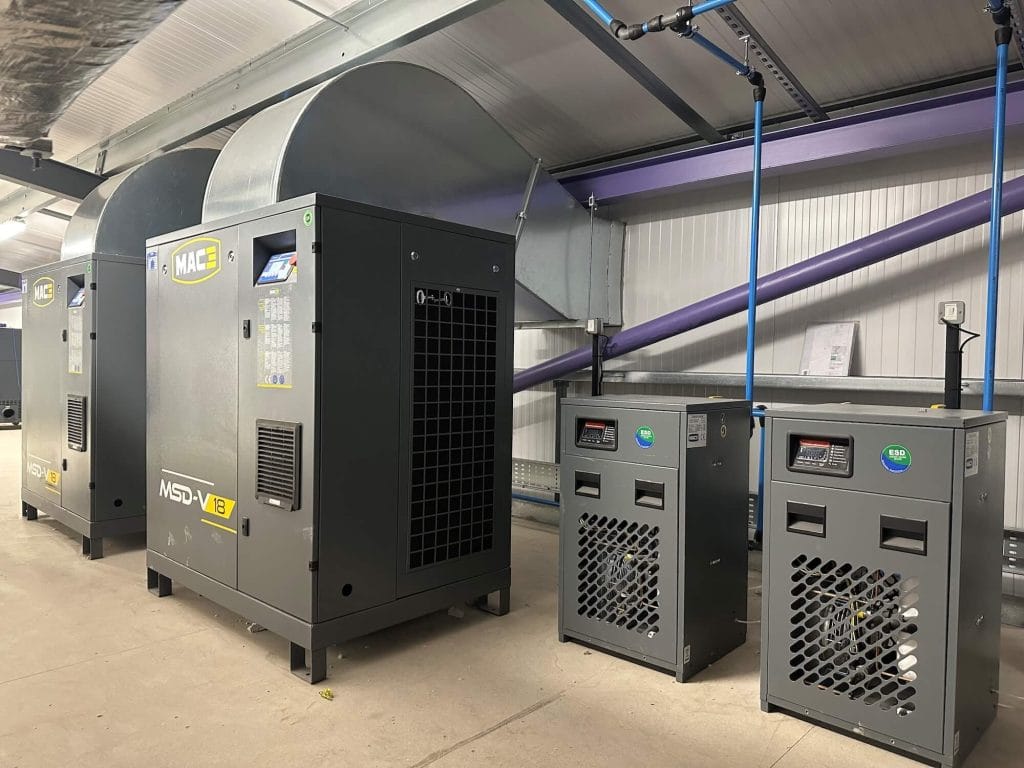
What Is a Rotary Screw Air Compressor?
A rotary screw air compressor is a type of positive displacement compressor that uses two interlocking helical rotors to compress air. Unlike reciprocating piston compressors, which use pistons moving up and down within cylinders, rotary screw compressors generate compressed air through a continuous rotary motion.
As the rotors turn, air is drawn into the compression chamber. The space between the rotors gradually decreases, compressing the air before it is discharged into the system at the required pressure. This design allows rotary screw compressors to deliver a constant supply of compressed air, making them ideal for businesses with ongoing air demand.
How Does a Rotary Screw Compressor Work?
The operating principle behind a rotary screw compressor is both simple and highly effective. Air enters the compressor through an inlet valve and is drawn into the compression chamber between two precision-machined rotors. As these rotors rotate, the trapped air moves along the length of the screws while the available volume decreases.
This reduction in volume causes the air pressure to increase until it reaches the desired pressure level. The compressed air is then discharged into the air receiver or distribution system for use throughout the facility. Because this process occurs continuously, rotary screw compressors provide a smooth and uninterrupted airflow without the pulsing often associated with piston compressors.
Why Businesses Choose Rotary Screw Air Compressors
Rotary screw compressors have become the preferred solution for many industrial and commercial applications due to their combination of reliability, efficiency, and performance. One of the biggest advantages is their ability to operate continuously. While piston compressors are often designed for intermittent use, rotary screw compressors can run for extended periods without interruption, making them ideal for demanding environments. They also tend to operate more quietly than piston compressors, which can improve working conditions within production facilities and workshops.
Other benefits include:
- Continuous air delivery
- Improved energy efficiency
- Lower noise levels
- Reduced vibration
- Longer service intervals
- Greater reliability
- Lower operating costs over time
For businesses that rely heavily on compressed air, these advantages can translate into significant productivity and cost-saving benefits.
Fixed Speed vs Variable Speed Compressors
One of the most important decisions when selecting a rotary screw compressor is choosing between a fixed speed and variable speed model.
Fixed Speed Rotary Screw Compressors
Fixed speed compressors operate at a constant motor speed whenever they are running. When demand drops, the compressor may enter an unloaded state until additional air is required. These systems are often well suited to businesses with a relatively consistent compressed air demand throughout the day.
Fixed speed compressors typically offer:
- Lower upfront investment
- Simple operation
- Proven reliability
- Straightforward maintenance
For many workshops and manufacturing environments with stable air requirements, a fixed speed compressor remains an excellent choice.
Variable Speed Drive (VSD) Compressors
Variable speed compressors automatically adjust motor speed to match air demand. Rather than running at full speed continuously, the compressor only produces the amount of air required by the system. This can result in substantial energy savings, particularly in facilities where compressed air demand fluctuates throughout the day.
Benefits of variable speed compressors include:
- Reduced energy consumption
- Lower operating costs
- More stable system pressure
- Reduced wear and tear
- Improved efficiency during varying demand
Although the initial investment is often higher, the long-term savings can be significant for businesses with changing air requirements.
Oil-Injected vs Oil-Free Rotary Screw Compressors
Rotary screw compressors are available in both oil-injected and oil-free configurations.
Oil-Injected Compressors
Oil-injected compressors use lubricating oil within the compression chamber to cool, seal, and lubricate the rotors. These systems are highly efficient, reliable, and suitable for the majority of industrial applications.
Common uses include:
- Manufacturing
- Engineering
- Automotive workshops
- Fabrication facilities
- Logistics operations
Oil-Free Compressors
Oil-free compressors are designed for applications where air purity is critical and even trace amounts of oil contamination cannot be tolerated.
Industries that commonly require oil-free compressed air include:
- Pharmaceutical manufacturing
- Food and beverage production
- Medical facilities
- Dental practices
- Electronics manufacturing
These systems deliver exceptionally clean air while helping businesses comply with strict industry standards.
Common Applications for Rotary Screw Compressors
Rotary screw compressors are used across a wide range of sectors due to their versatility and reliability. Manufacturing facilities often rely on them to power production equipment and automation systems. Engineering workshops use them for pneumatic tools and machinery, while food processors utilise compressed air throughout packaging and production operations.
Other industries that regularly use rotary screw compressors include:
- Automotive
- Aerospace
- Agriculture
- Healthcare
- Pharmaceuticals
- Warehousing
- Recycling
- Construction
- Transport and logistics
Wherever there is a need for a reliable and continuous compressed air supply, rotary screw compressors are often the preferred solution.
Choosing the Right Rotary Screw Compressor
Selecting the right compressor requires careful consideration of your business requirements. One of the most important factors is airflow demand, usually measured as Free Air Delivery (FAD). Choosing a compressor that is too small can lead to pressure drops and poor performance, while an oversized unit may waste energy and increase costs.
You should also consider:
- Required operating pressure
- Future business growth
- Daily running hours
- Power supply availability
- Air quality requirements
- Available installation space
- Energy efficiency objectives
A professional system assessment can help ensure the correct equipment is selected for both current and future needs.
Installation Considerations
Even the best compressor can underperform if it is not installed correctly. The compressor room should provide adequate ventilation to remove heat generated during operation. Poor ventilation can reduce efficiency and shorten equipment lifespan. Pipework design is equally important. Correct pipe sizing and layout help minimise pressure losses and improve overall system performance.
Additional equipment may also be required, including:
- Air receivers
- Refrigerant dryers
- Desiccant dryers
- Filtration systems
- Condensate management systems
- Compressor management controls

A properly designed compressed air system maximises efficiency while reducing maintenance costs and energy consumption.
Maintenance and Servicing
Like any industrial equipment, rotary screw compressors require regular servicing to maintain performance and reliability.
Routine maintenance typically includes:
- Oil changes
- Filter replacements
- Air intake inspections
- Separator element replacement
- Condensate drain checks
- System performance monitoring
A proactive servicing schedule helps prevent costly breakdowns while extending the life of the compressor. Many businesses choose planned maintenance agreements to ensure servicing is carried out at the correct intervals and to minimise unexpected downtime.
Why Rotary Screw Compressors Are the Industry Standard
Rotary screw air compressors have earned their reputation as the preferred compressed air solution for modern businesses. Their ability to provide a reliable, continuous air supply while maintaining excellent efficiency makes them suitable for a huge range of industrial and commercial applications.
With advances in variable speed technology, compressor management systems, and energy-efficient designs, today’s rotary screw compressors deliver even greater performance and cost savings than ever before. For businesses looking for dependable compressed air, rotary screw compressors continue to set the benchmark.
Reliable Compressed Air Starts with the Right System
Choosing the right rotary screw air compressor is about more than simply selecting a machine. It involves understanding your air demand, operating environment, energy usage, and future growth plans.
A correctly specified and professionally installed system can improve productivity, reduce operating costs, and provide years of reliable service. By taking the time to choose the right compressor and supporting equipment, businesses can maximise the return on their investment and ensure a dependable compressed air supply for years to come.
Speak to Compressor Care NW Ltd Today
If you are considering a rotary screw air compressor or would like expert advice on selecting the right system for your business, Compressor Care NW Ltd is here to help.
Our experienced team provides compressor supply, installation, servicing, repairs, pipework, air treatment solutions, and ongoing support for businesses across the UK.
Contact us today to discuss your requirements or arrange a consultation.
Email: [email protected]
Telephone: +44 (0)1745 336527